

I am deeply passionate about writing about the exhilarating events and developments that unfold in the art world. One individual who continues to capture my fascination is the renowned artist Jonathan Yeo whom I was fortunate enough to interview a couple of weeks ago.
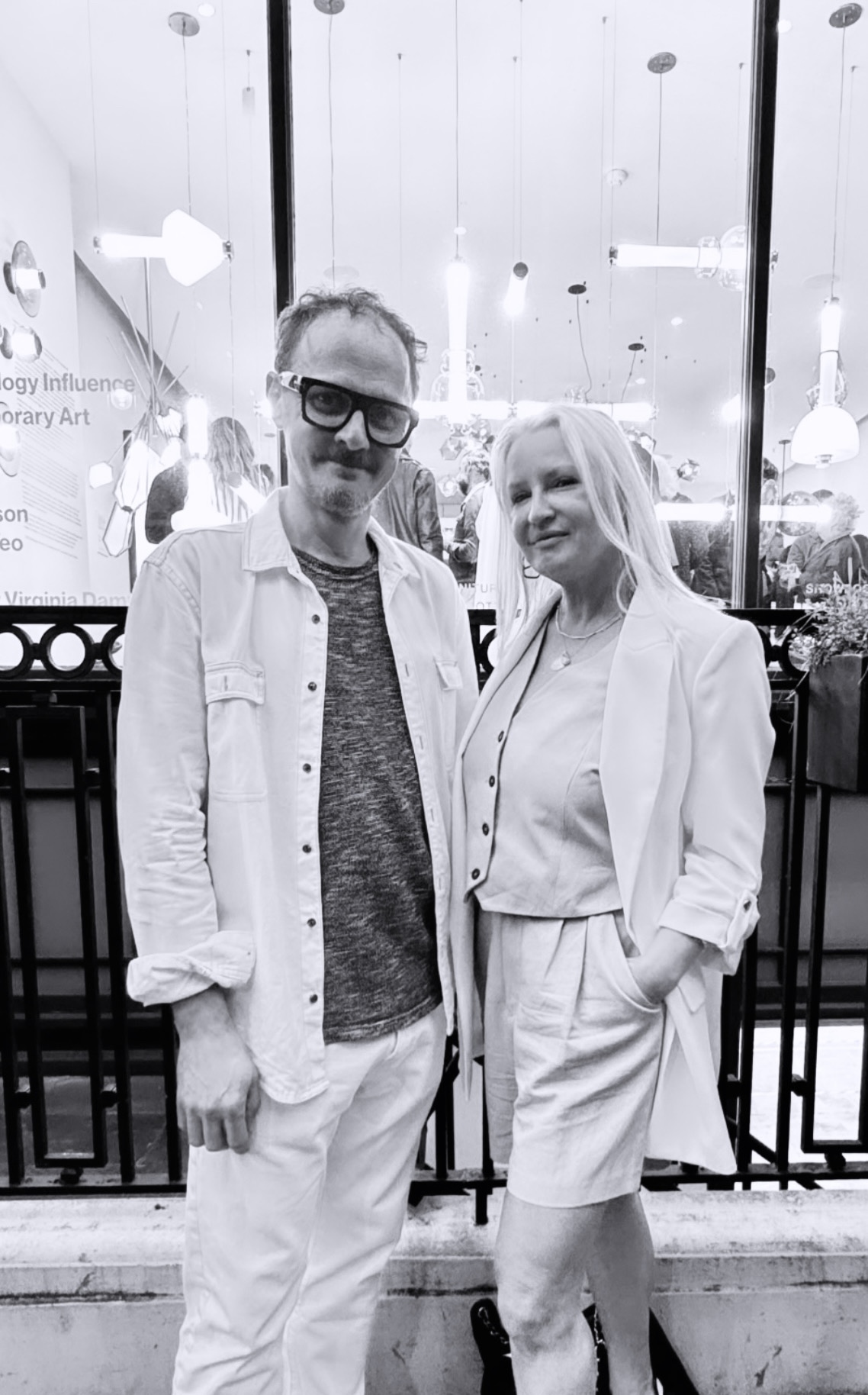
Jonathan Yeo and Luiza Yoanna Gibb

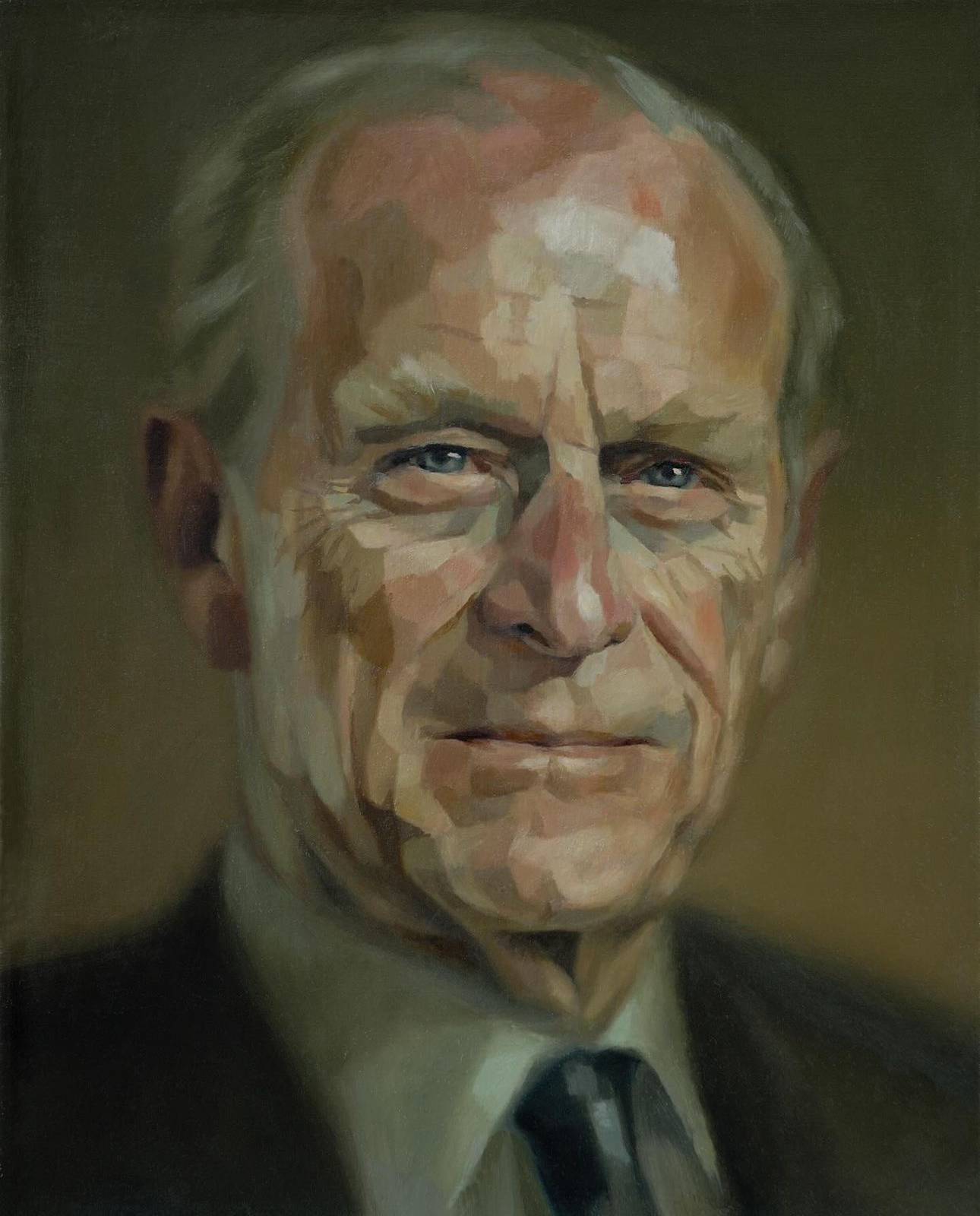
For those of you who don’t know Jonathan, he is a renowned British portrait artist who has created portraits of various famous individuals. Some of the people he has painted portraits of include Malala Yousafzai – Pakistani activist and Nobel laureate, Kevin Spacey – American actor, Tony Blair – former British Prime Minister, Cara Delevingne – British model and actress, Prince Philip – Duke of Edinburgh (commissioned by the Royal Collection Trust) and many other notables.
Yeo has been bestowed with a remarkable opportunity: a commission by Drapers London to paint a portrait of His Majesty the King fast forward many months and it was unveiled by the King himself at Buckingham Palace earlier this week. The depiction is an oil painting on canvas measuring 8ft 6in by 6ft 6in. The new work depicts His Majesty wearing the uniform of the Welsh Guards, of which he was made Regimental Colonel in 1975. With a sword in his hand and a butterfly landing on his shoulder, Yeo’s painting attempts to highlight the King’s dedication to environmental causes.
This prestigious undertaking not only showcases Yeo’s exceptional talent and skill as an artist but also highlights his ability to capture the essence and majesty of his subjects. With his innovative approach to portraiture and his ability to bring depth and character to his artwork, Yeo has created a representation that is both captivating and thought-provoking. I am truly thrilled to have the opportunity to write about Yeo’s extraordinary journey and his contribution to the art world.
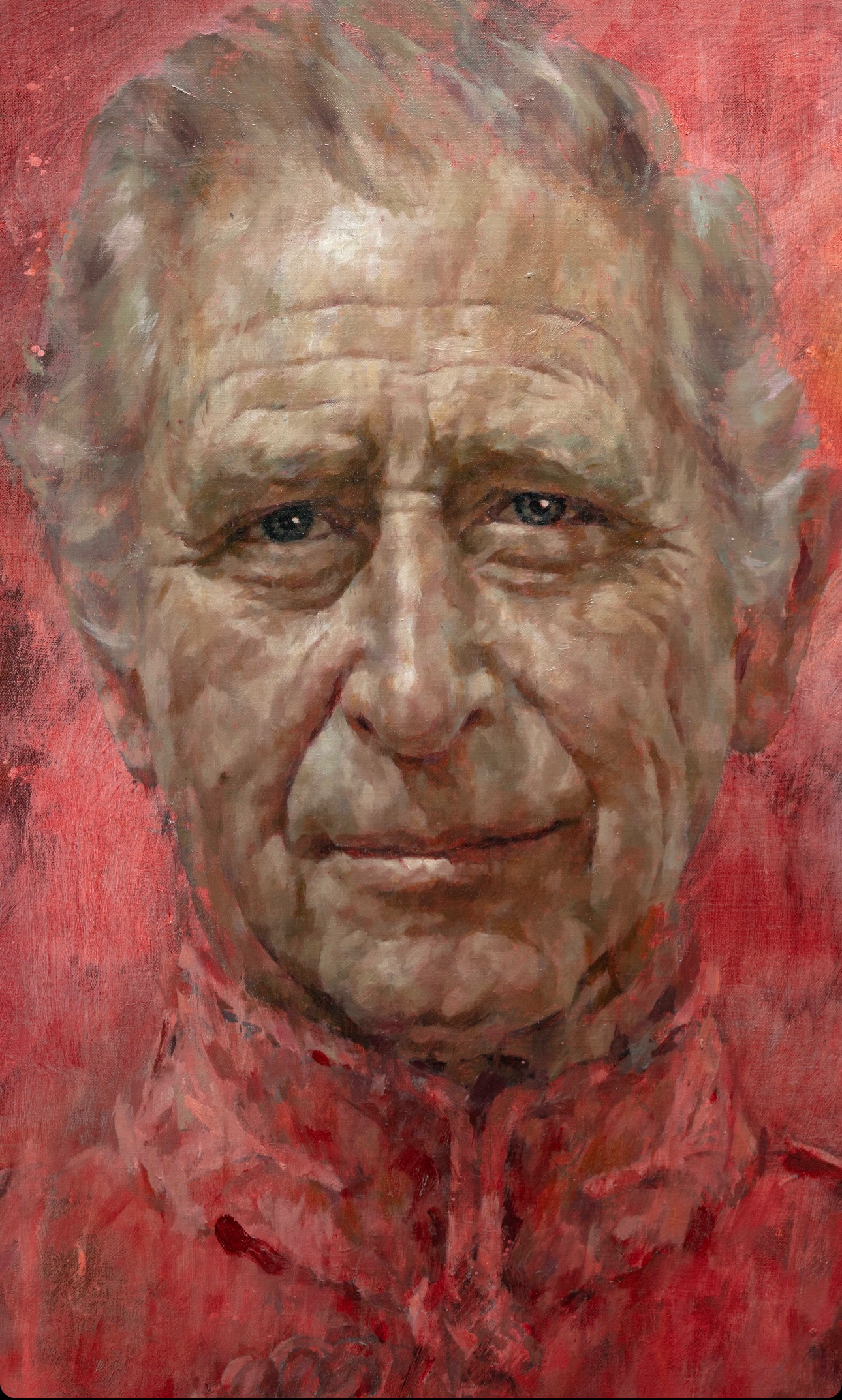
The portrait of His Majesty the King has received a mixed response from the public and art critics
Why the ambiguous response you might ask? Well, portraits, especially those of public figures, often face scrutiny and critique. I am quite sure that Yeo is aware that his work will be evaluated and judged by a wide audience, which in turn must have increased the pressure to create something that is well received. In the artist’s own words, the role of the portrait artist is to capture the life experiences and humanity of their subject and to obtain this for His Majesty the King who occupies such a unique role is a tremendous challenge!
If we look at the portrait, it showcases Yeo’s signature style, which combines realism with elements of abstraction and expressionism. It captures the essence of His Majesty the King with a focus on his facial features and expression. Yeo aimed to depict the King as a thoughtful and introspective figure, reflecting his struggles and responsibilities during his reign.
Some praised Yeo’s ability to capture the King’s character and emotional depth, appreciating the artist’s unconventional approach to portraiture. They admired the way Yeo portrayed the King’s vulnerabilities and the sense of humanity he brought to the portrait.
However, there were also critics who felt that the representation was too abstract and lacked the traditional regality and formality associated with royal portraits. They believe that the painting deviates too far from the traditional style and fails to capture the King’s grandeur and stature.
But one would argue that the style of a portrait is a creative choice made by the artist and can vary greatly based on personal preference, artistic vision, and the desired effect the artist wants to achieve.

In fact, the diversity of styles in portraiture is what makes it such a rich and captivating art form. Each artist brings their own unique perspective and interpretation to their work, resulting in a wide range of styles and approaches.
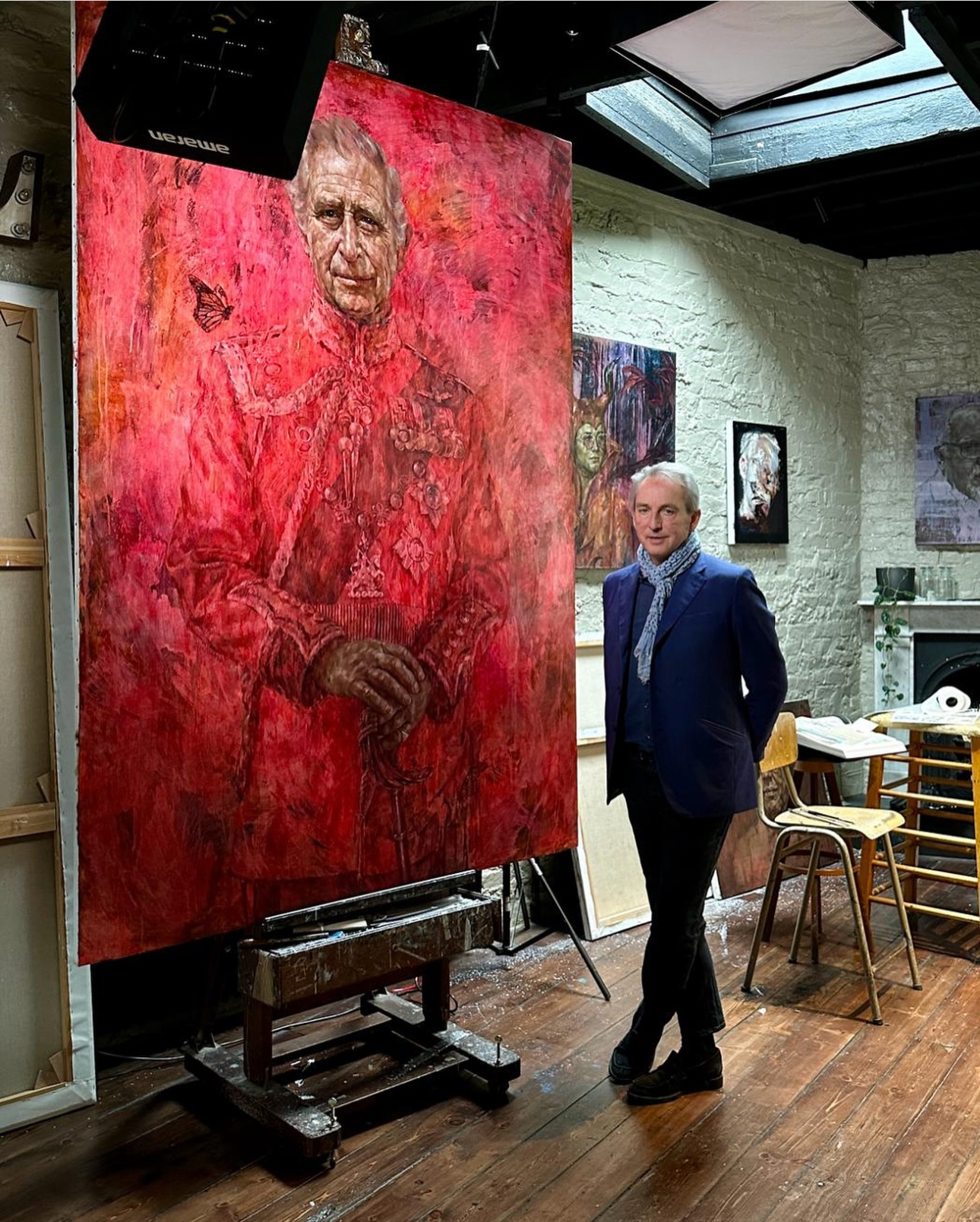
Portrait by Jonathan Yeo with Philip Mould
Whatever the expected varied reception, “His Majesty, The King” remains an important work in Jonathan Yeo’s portfolio and serves as a captivating slice of history, acting as a powerful reminder of the events and atmosphere of this particular era. It captures not only the physical appearance of the King but also the essence of the time period in which he reigns.
The portrait continues to provoke discussions and interpretations, showcasing Yeo’s ability to push the boundaries of traditional portraiture while capturing the essence of his subjects.
The portrait is now on public view at the Philip Mould Gallery until 14th June. The painting will ultimately be hung in Drapers Hall in London.
Thank you to Jonathan Yeo for giving me this opportunity to interview him and I wish to express my gratitude for his time and willingness to share his insights with me.
Pictures: By kind permission of Jonathan Yeo
About Luiza Gibb
Luiza Gibb is founder of leading online gallery Flat Space Art, a social-media art expert (@luizagibb @flatspaceart) and ambassador for accessible art. In her own column here in Premier Magazine, she shares the most innovative finds in the art world, including looking at those making waves, talking trends, investibles, must-see exhibitions and how art pervades our society and culture.
 Art, theatre, music and culture are regular features in Premier Magazine. You can browse the current edition online HERE


